About Purnam

Completeness is not somewhere else.

Purnam takes its inspiration from the insight of Purnamadah Purnamidam: fullness is not produced by adding something. It is what remains when we stop mistaking noise, fear and roles for who we are.

What Purnam stands for

A return to the completeness already present.

Purnam is not built on the idea that people are broken. It is built on a quieter possibility: beneath overthinking, emotional turbulence, relational fatigue and constant striving, there is a clarity that can be recognised and lived from.

The work is not to withdraw from life. The work is to meet life without being entirely ruled by the mind's noise.

We use Yoga, Vedanta, Buddhism, meditation, journalling and creative inquiry as practical doorways into clarity, presence and ease.

"If you are suffering, you are lost in thoughts. It is that simple."

Who Purnam is for

For thoughtful people who want depth without drama.

Purnam is for sincere seekers, practitioners and ordinary people in honest moments: people who want to live with less inner friction and more clarity.

People who overthink, but do not want another technique to control the mind.
People who feel emotions deeply and want steadiness without becoming numb.
People who are tired of reacting in relationships and want to respond with more clarity.
People drawn to Yoga, Vedanta or Buddhism, but looking for a practical and non-dogmatic doorway.
People in transition who sense that external success alone is no longer enough.

Deepak and Gauri

Two complementary ways of holding the same space.

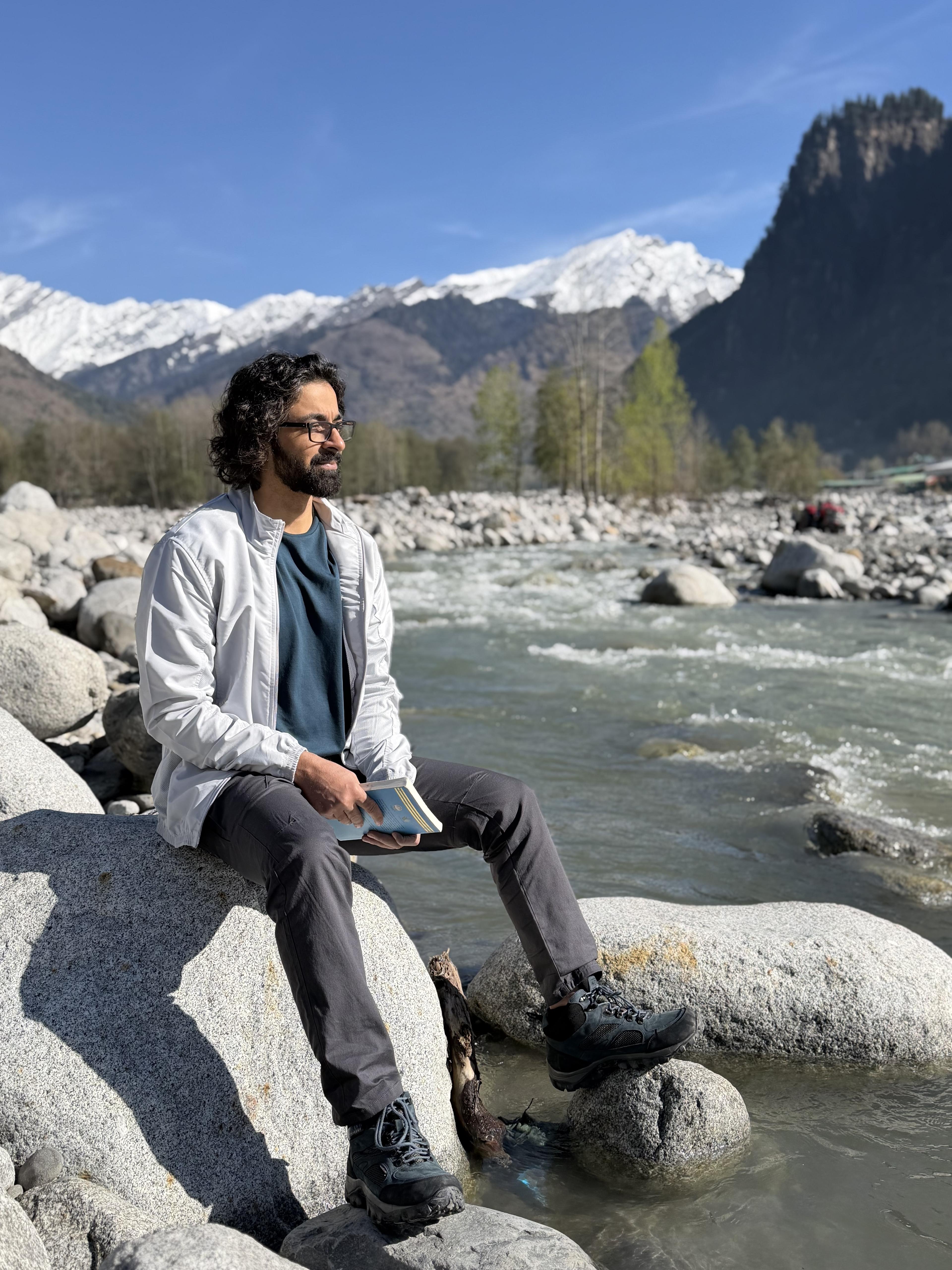
Purnam is held by Deepak and Prabhjot (Gauri), bringing together contemplative clarity, lived Vedantic inquiry, Yoga, movement and embodied sensitivity.

Deepak Atri

Co-creator of Purnam

Deepak Atri

Deepak offers conceptual clarity, contemplative inquiry and practical pointers that help students see the mind without being trapped by it.

Deepak is a long-time student and practitioner of Advaita Vedanta, Buddhism and contemplative inquiry. He is the author of A Simple Introduction to Non-Duality, a beginner-friendly book on Vedanta. His work focuses on clarity, simplicity and integration, helping people recognise inner stillness and translate it into everyday life, work and relationships.
Prabhjot (Gauri)

Co-creator of Purnam

Prabhjot (Gauri)

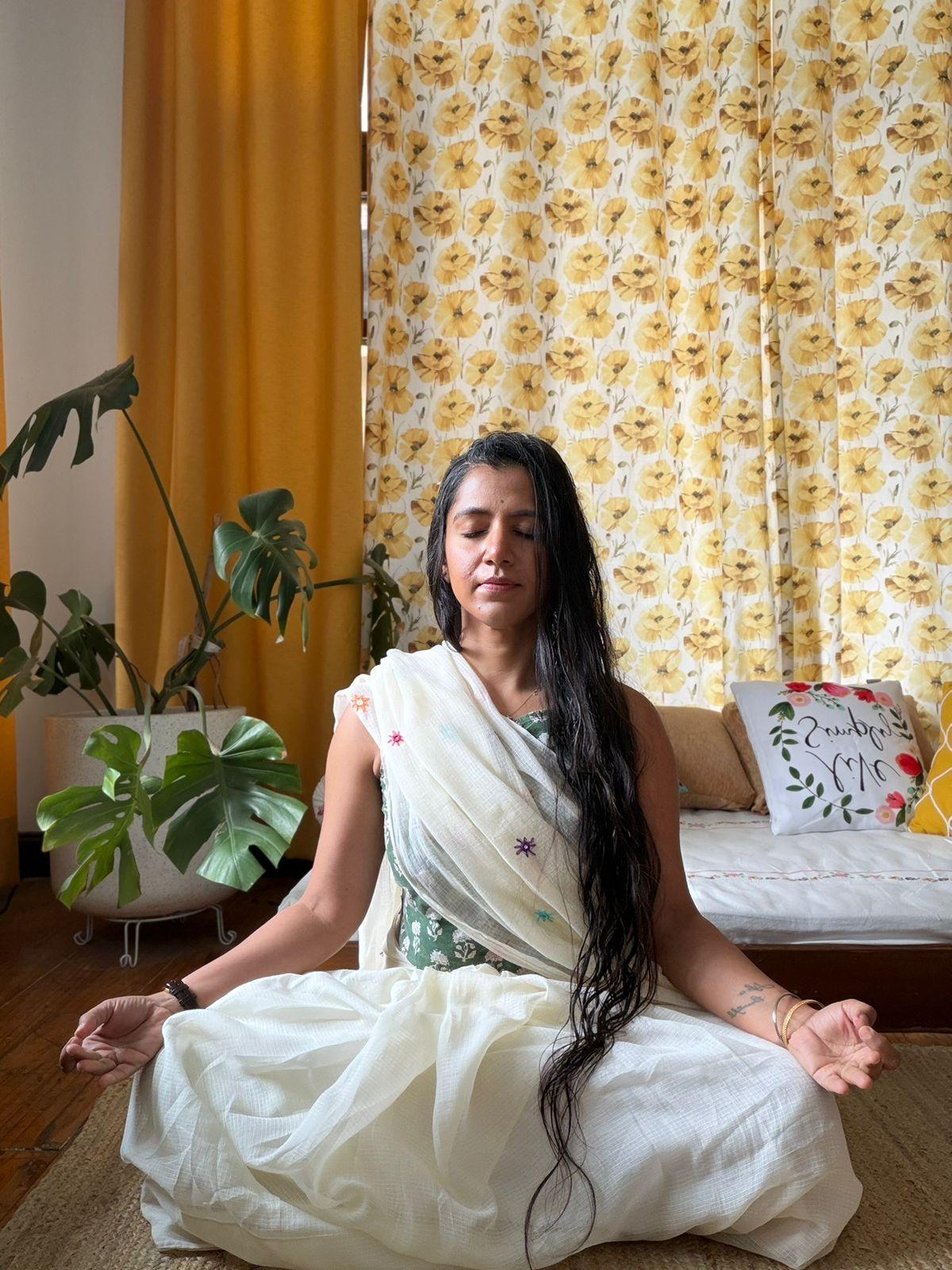
Gauri offers an embodied doorway into the work: Yoga, breath, movement and sensitivity to the body as a living field of awareness.

Prabhjot brings an embodied, experiential dimension through Yoga, movement and arts-based facilitation. She has completed her TTC and ATTC from Sivananda and carries over a decade of Yoga teaching experience. Her approach emphasises listening to the body, cultivating sensitivity and surrendering to the flow of experience gently, without force.

Our objectives

Relax, understand, then live from a deeper steadiness.

Purnam moves in three simple steps. Each step is practical, but together they point toward the deeper insight of completeness.

Unstretch the system

Most people arrive stretched, burdened or tired from carrying too much. The first movement is simple: soften the grip, breathe again, and let the body-mind settle.

Find clarity in daily life

Once there is a little more space, we look at real questions: work, relationships, fear, choices, emotions, purpose and the patterns that keep repeating.

Glimpse independent well-being

Beyond better moods or better circumstances, Purnam points toward a steadiness that is not dependent on everything outside being perfect.

Present, not perfect

The point is not to become a flawless spiritual person.

Present, not perfect means we begin where we are: distracted, tender, reactive, curious, tired, hopeful. Nothing has to be hidden before it can be understood. Practice is not another performance. It is a kinder and more honest way of seeing.

Why a different format

Traditional teaching is powerful. But many people need a bridge.

The old traditions are profound, but their usual forms can feel distant from modern lives: too much jargon, too much hierarchy, too little room for questions, and not enough connection to work, relationships, emotions and the body.

We do not ask people to believe first. We invite them to observe, test and experience.
We do not turn wisdom into performance. The orientation is present, not perfect.
We do not separate philosophy from daily life. If a teaching cannot help with fear, reaction, attention and relationship, it remains incomplete.

Teaching methodology

Ancient traditions, made practical without making them shallow.

Our method moves from settling the system, to seeing the mind clearly, to applying insight in action and relationship.

Direct experience

We begin from what participants can actually notice: breath, thought, emotion, attention, roles, fear and the sense of I.

Simple teaching

Stories from Vedanta, Yoga and Buddhism are translated without jargon, so they become usable in ordinary life.

Embodied practice

Meditation, Yoga, journalling, creative exploration and reflection help insight move from concept to lived understanding.

Gentle integration

The aim is not a peak state. It is responding with more clarity at work, at home, in conflict and in solitude.

How this works in real life

You do not leave life to become still.

Purnam is not an escape from work, family, responsibility or difficulty. It is a way of returning to them with more awareness and less compulsion.

At work

You still make decisions, handle pressure and meet uncertainty. The practice is to notice fear and reactivity before they take over.

In relationships

You still disagree, disappoint and get triggered. The practice is to listen more deeply and respond from steadiness rather than defence.

With yourself

You still feel thought, emotion and old patterns. The practice is to stop turning every inner movement into a verdict about who you are.

Community and continued learning

Insight needs a life to return to.

A circle, not a one-time event.

Retreats and programs create openings. Community helps those openings mature when people return to family, work and ordinary routines.

Practice deepens through repetition.

The same themes return at deeper levels: attention, emotion, roles, relationships, authenticity, action and the recognition of completeness.

Begin where life is asking for attention.

Explore an online program, join a retreat, or begin with a one-to-one conversation.